Making super feel relevant, human and worth engaging with.
Rest Member Onboarding - Customer Journey and CRM Experience
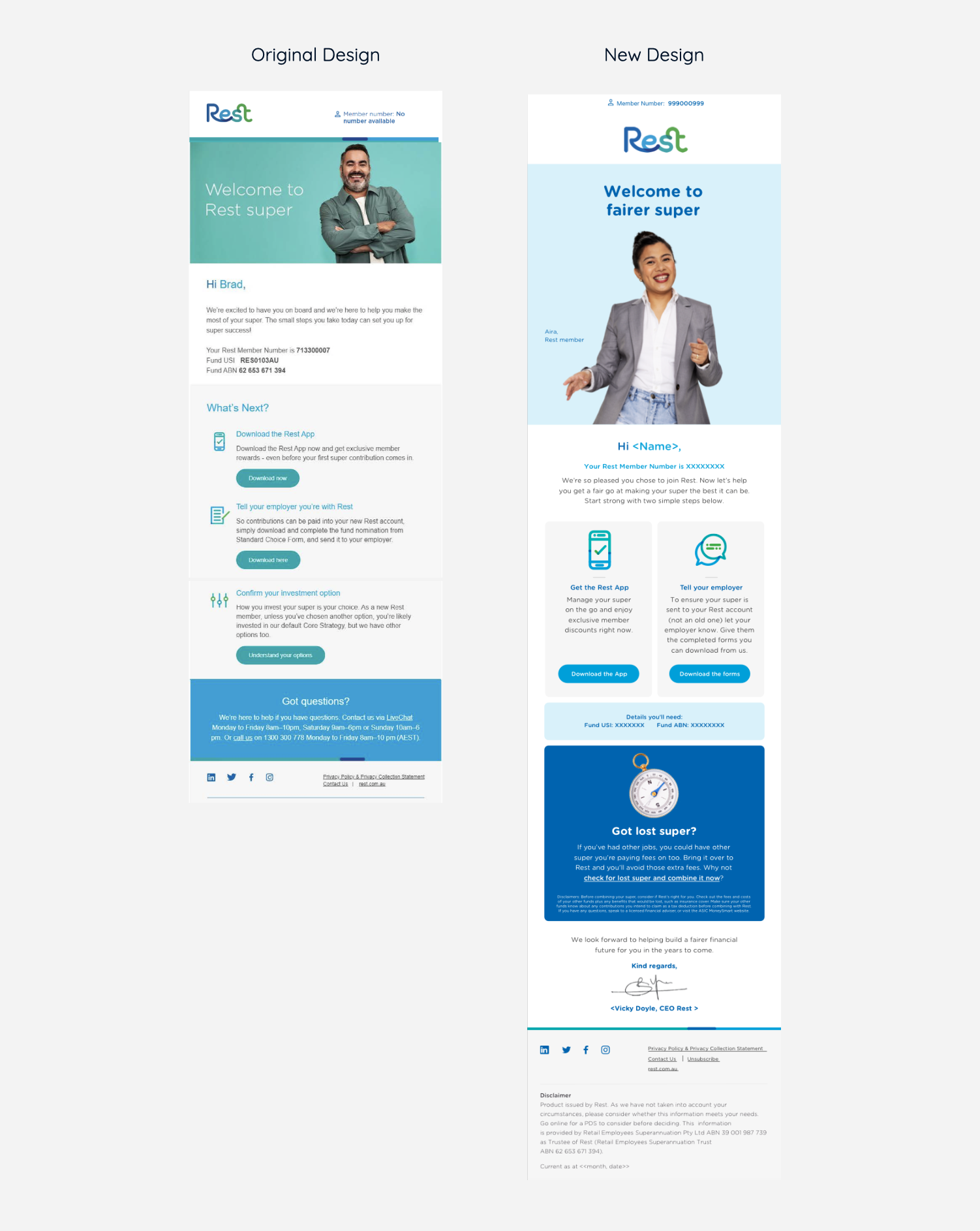
The brief was to improve Rest’s onboarding communications for new members. But the problem wasn’t simply how the communications looked or worked.
For many members — particularly younger ones — super felt distant from their lives. Making the experience clearer wouldn’t be enough if people still didn’t see why it mattered to them.
So I stepped back from the immediate output and reframed the challenge: how could we make super feel more relatable, relevant and human — wherever someone was in their life?
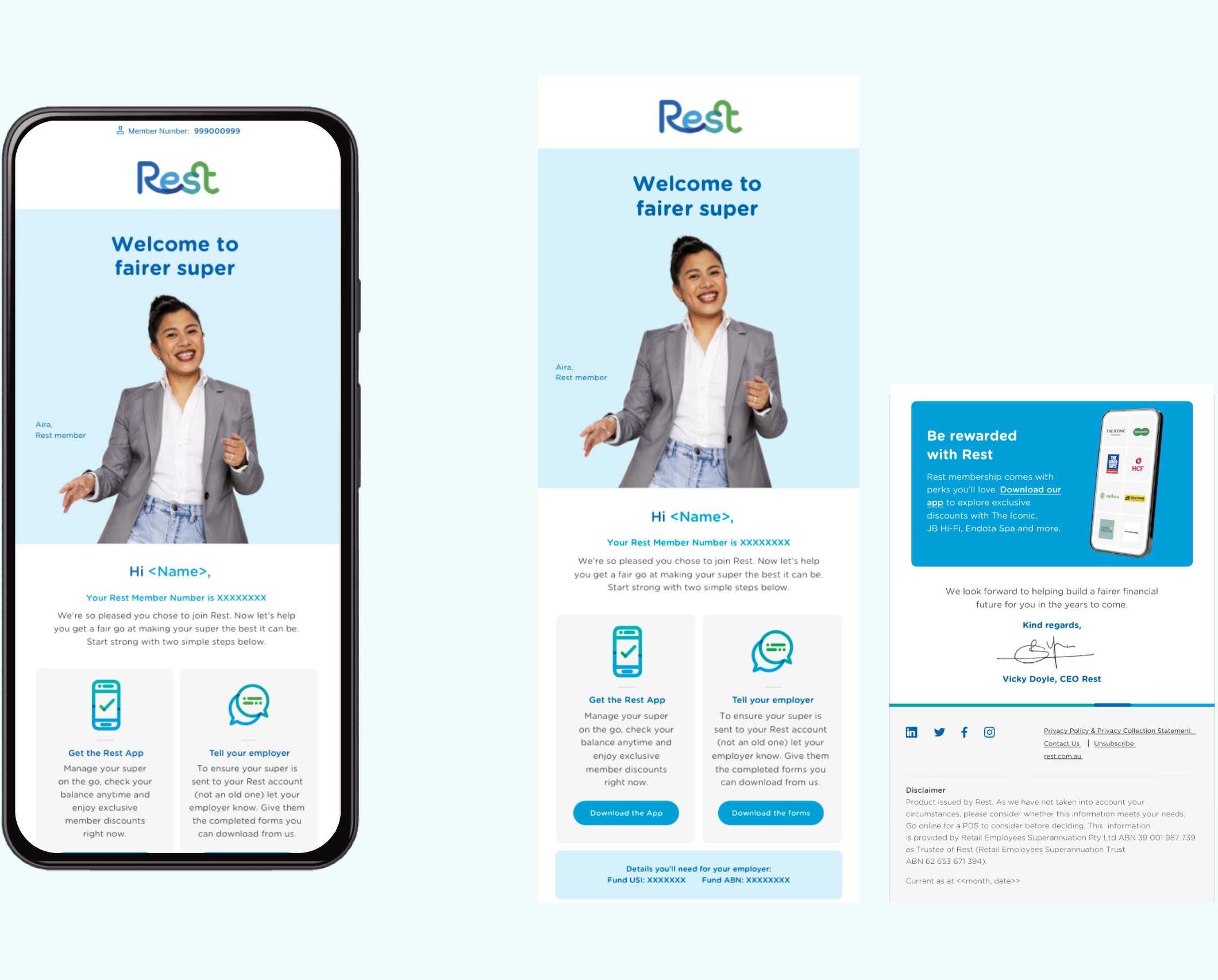
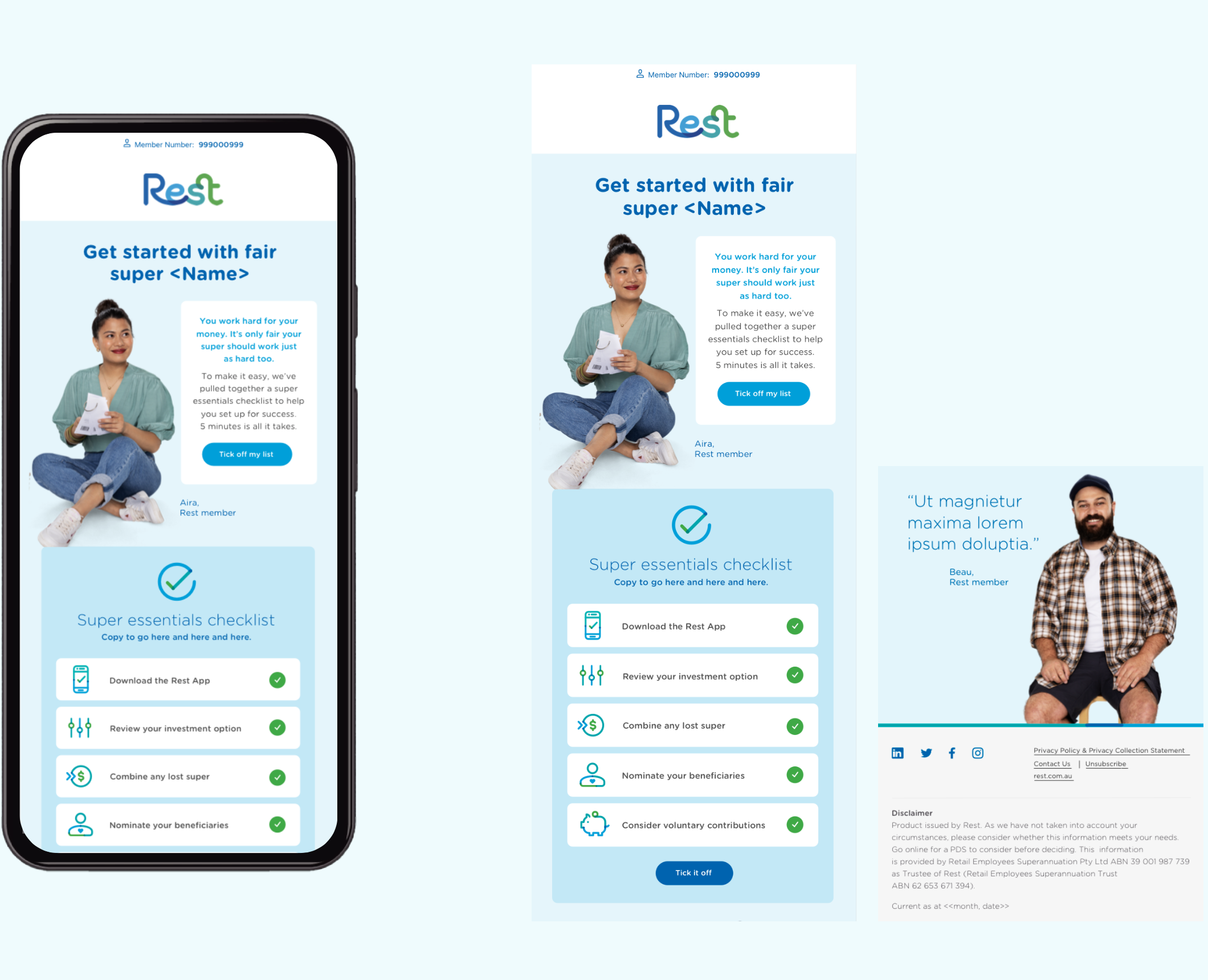
Working across customer journey, CRM, UX and creative direction, I turned that thinking into a personalised onboarding experience — using real member stories to build relevance, tailored pathways to respond to different needs, and a modular design system to bring it all together at scale.
Different members. Different needs. One connected Rest experience.
-
The onboarding brief revealed a bigger problem: relevance.
For many new members — particularly younger ones — super felt distant from the things that mattered in their lives. The challenge wasn’t simply to explain it better. It was to give people a reason to care.
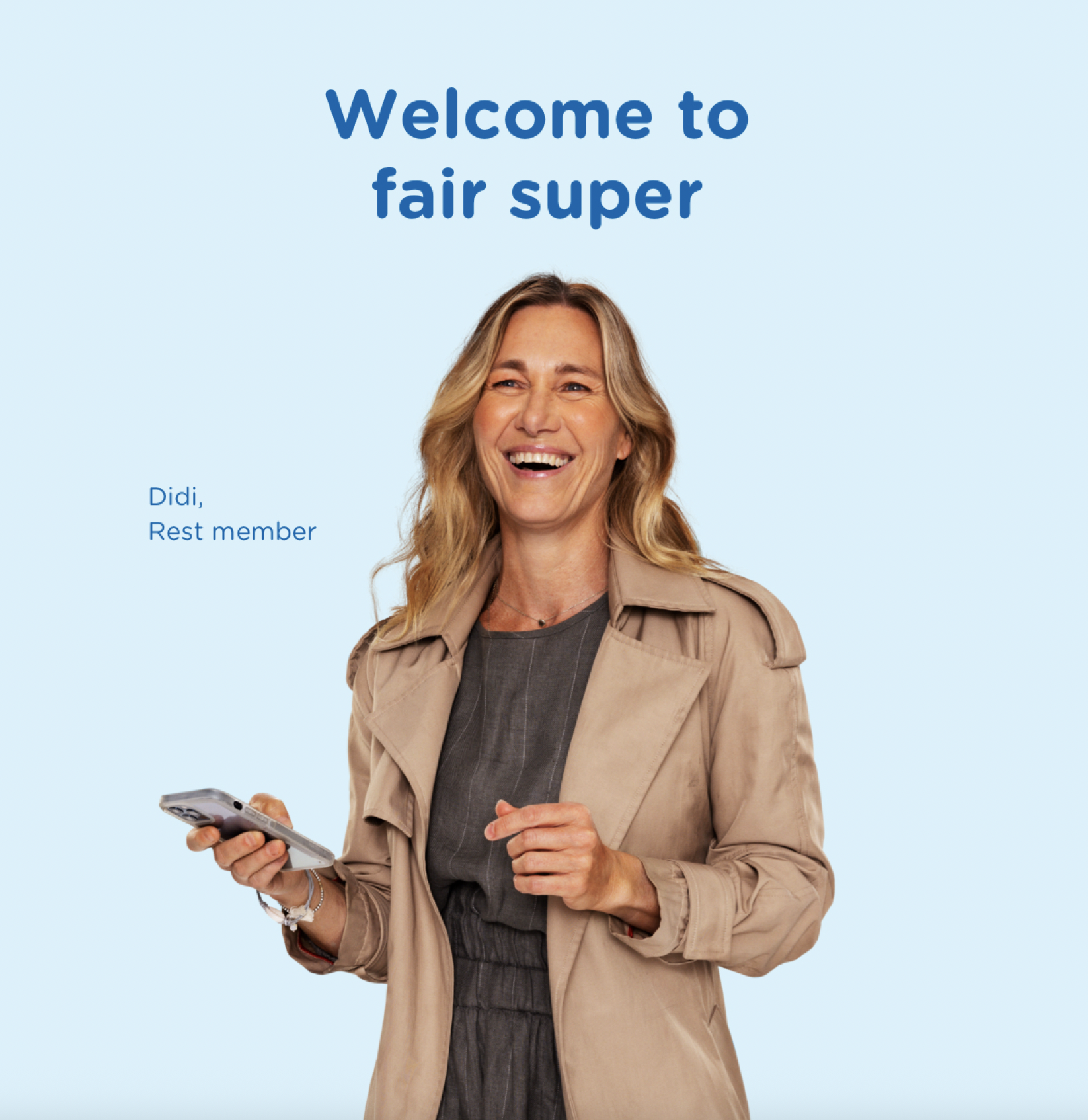
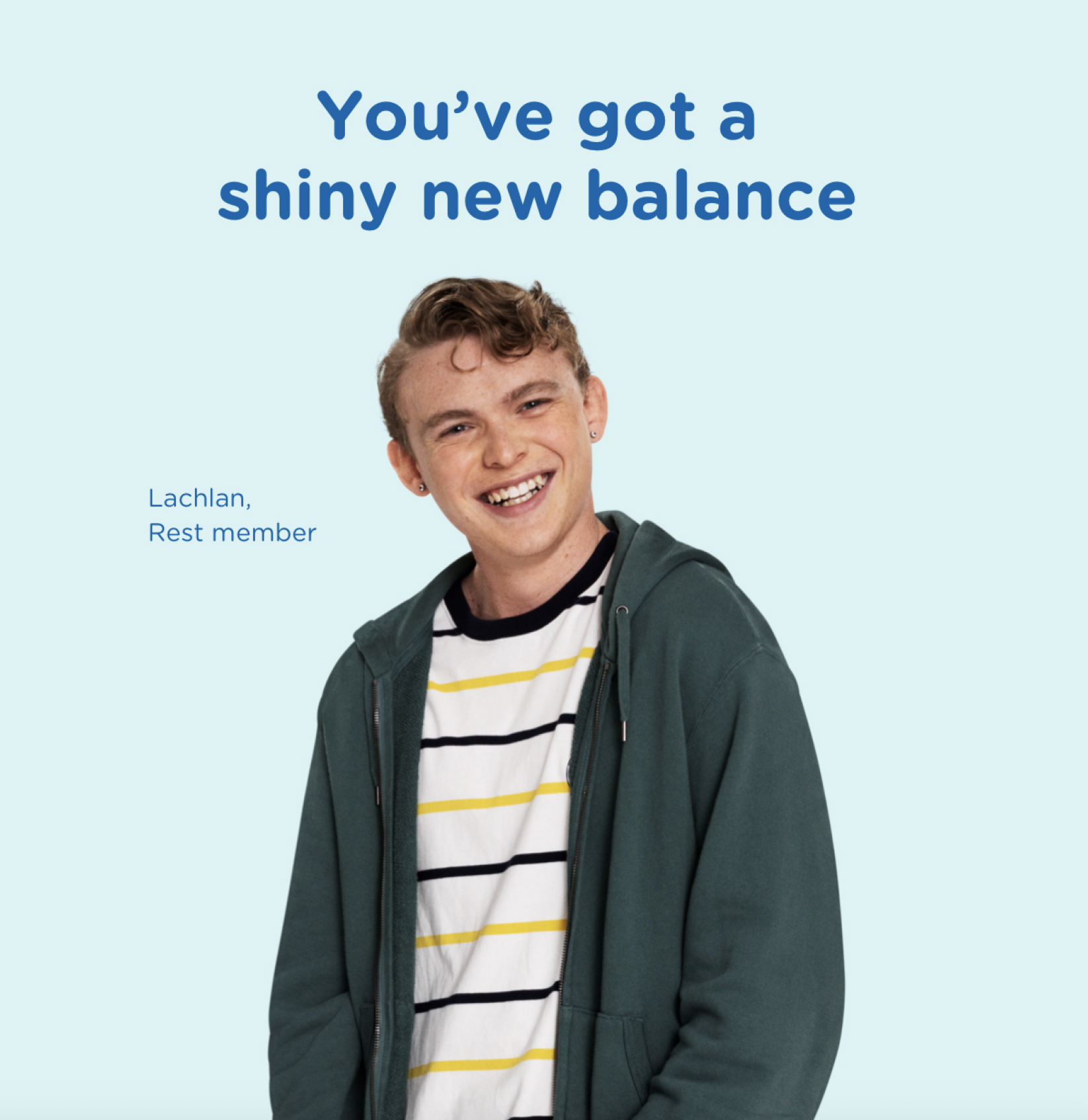
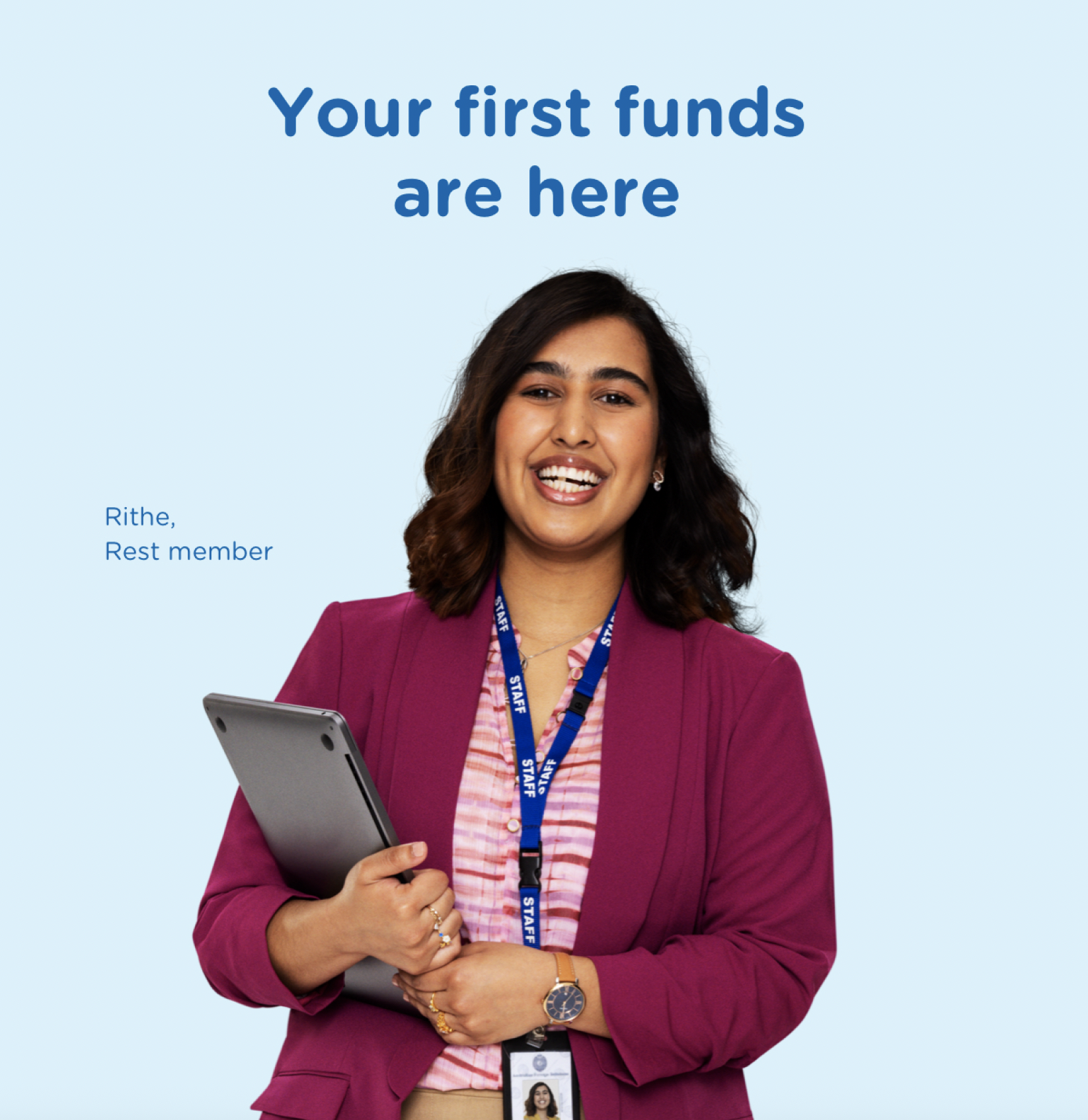
Rather than Rest constantly talking at people about super, we brought real Rest members into the experience — letting them tell their own stories and showing what super could mean at different stages of life.
I helped identify and recruit members, interview them and capture their stories, then worked with strategy and account leadership to turn those stories into content that could live throughout the onboarding experience.
The creative became less about explaining a financial product and more about helping people see where super fitted into their lives.
Make super relevant to where you are in life, not just where you are financially.
-
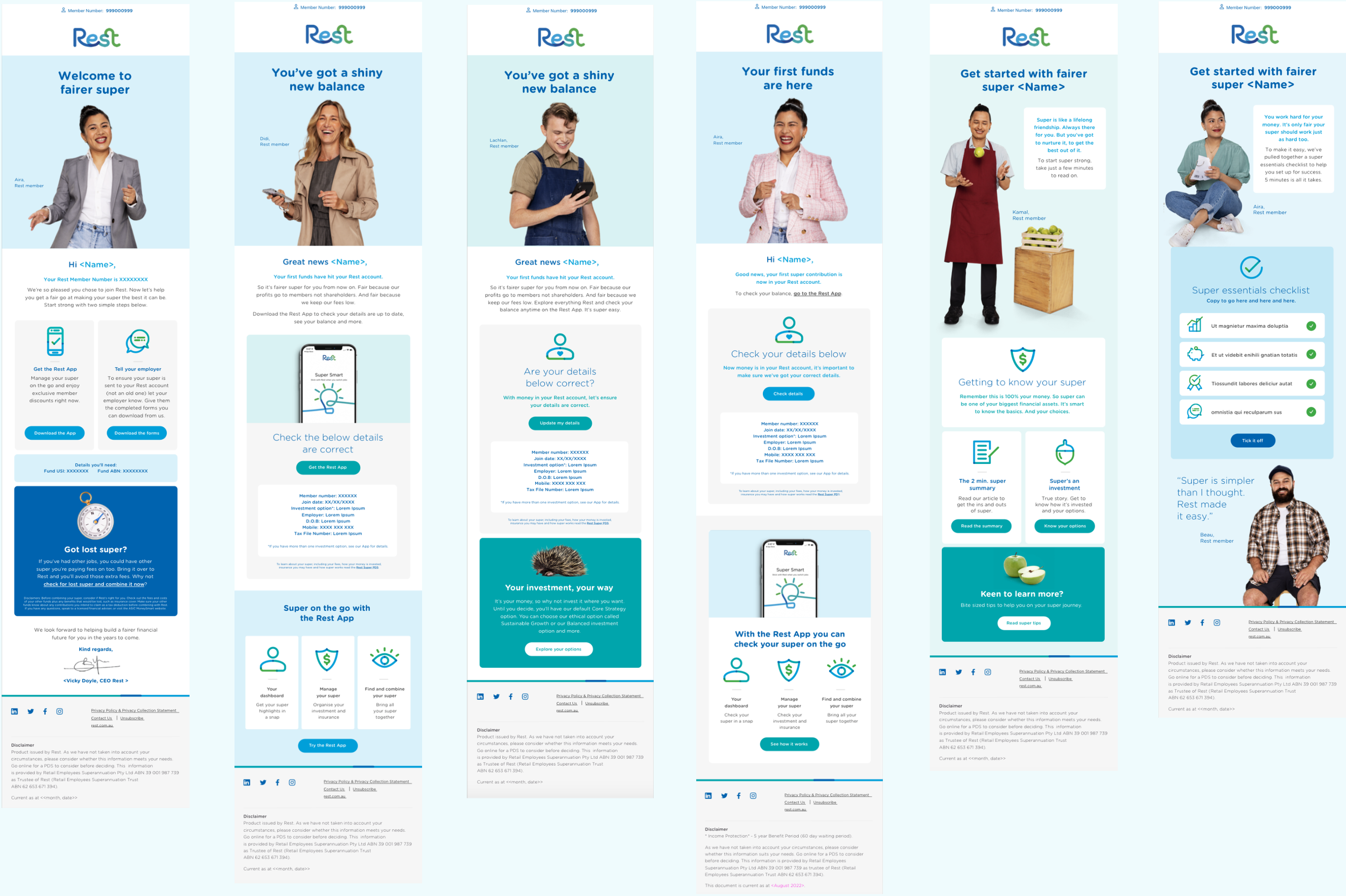
Relevance also meant recognising that there was no single version of a new Rest member.
Some had downloaded the app and were already engaging with their super. Others hadn’t taken that first step. Their age, behaviour and actions could all signal different needs — but the overall experience still had to feel connected.
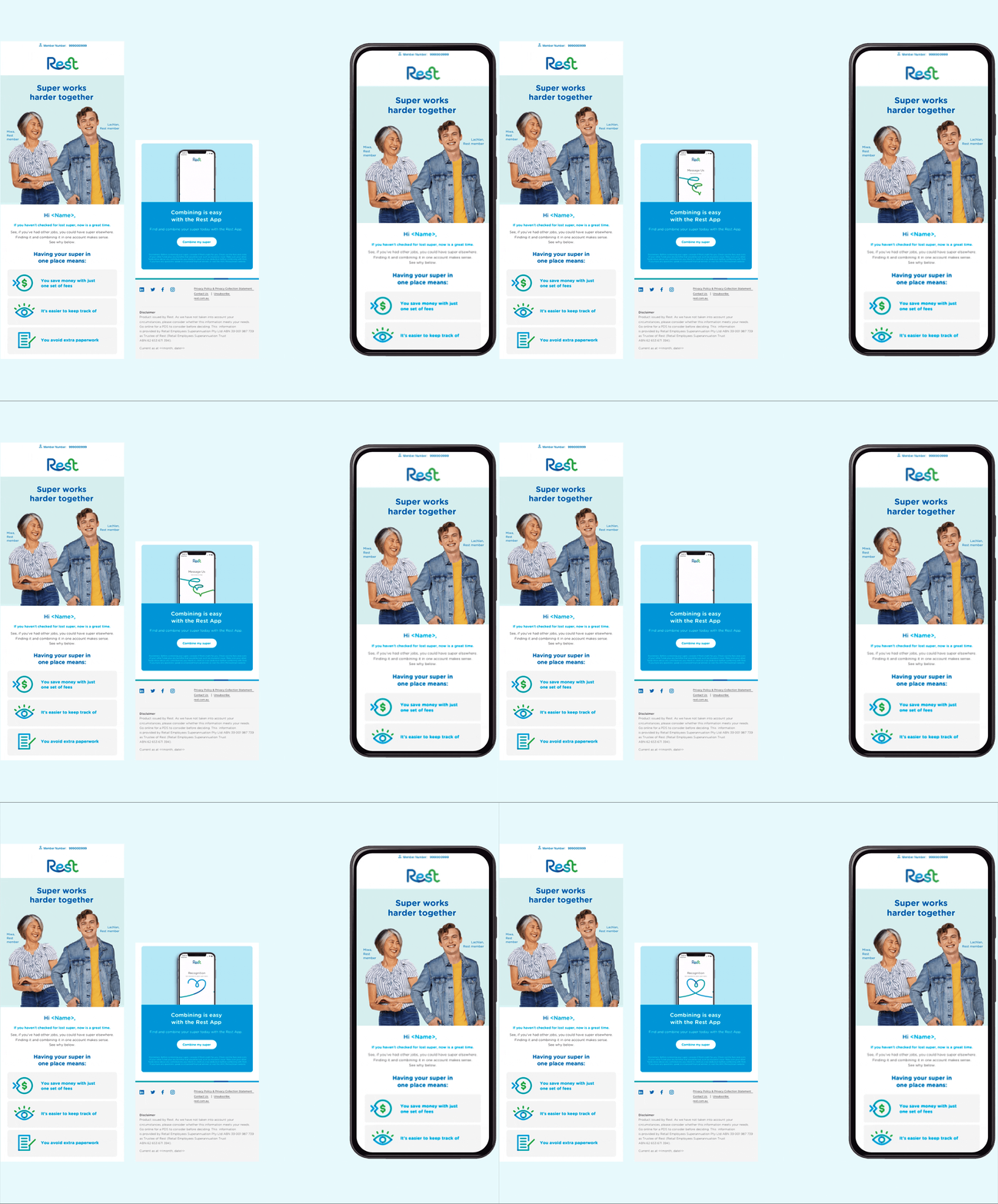
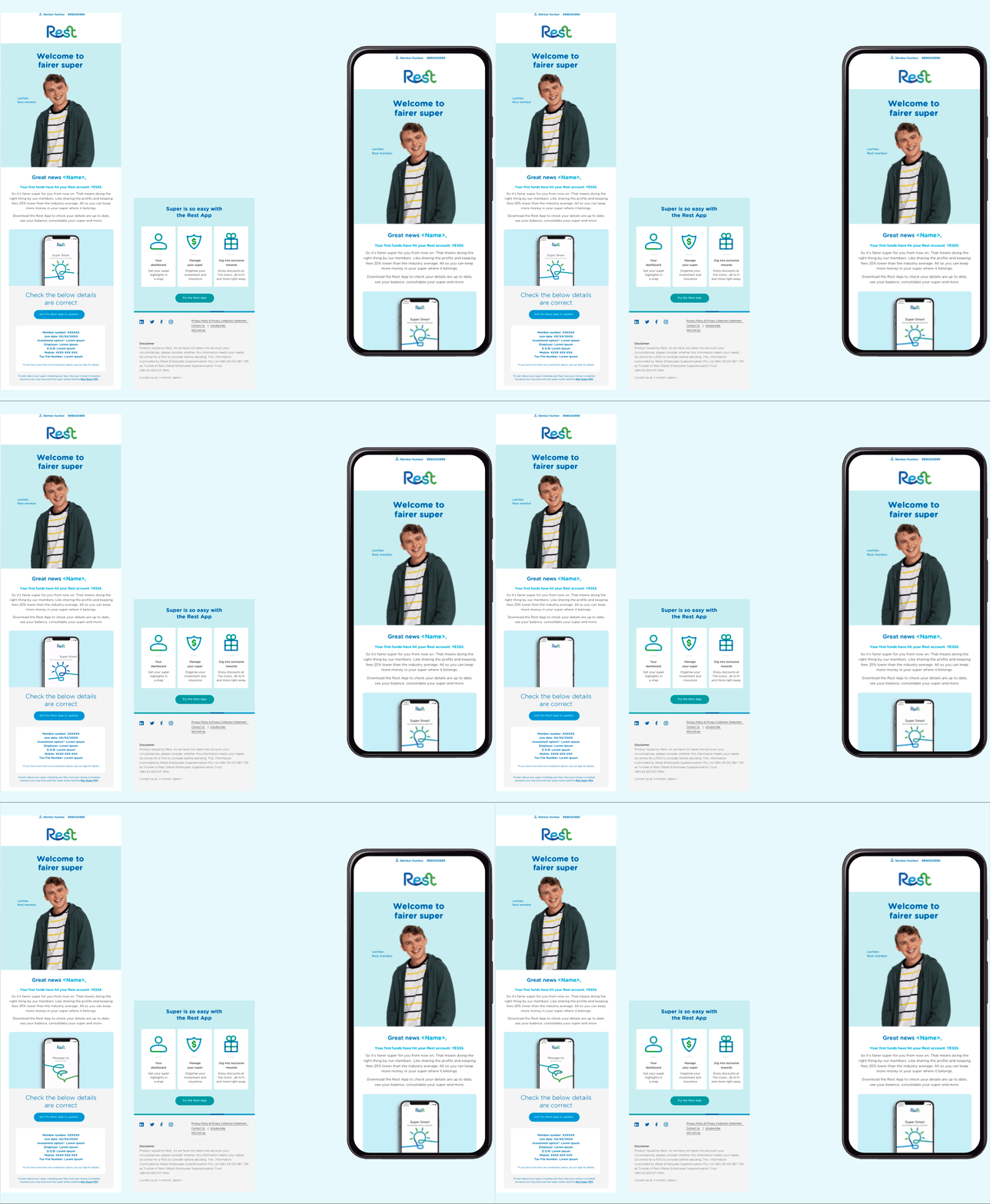
Rather than treating onboarding as one fixed sequence, I helped shape a CRM journey that responded to where each member actually was.
We mapped different behaviours and stages to the most useful next step, using tailored pathways, content and triggers to move members forward without overwhelming them.
The member-led creative could then flex across those journeys, making the experience not only personalised by data, but personally relevant.
Different pathways. One connected Rest experience.
-
Personalisation created another challenge: complexity behind the scenes.
Different audiences, behaviours, messages and pathways could easily become a growing collection of one-off communications. The system needed enough flexibility to adapt without every new scenario becoming a new design problem.
I developed a modular visual and UX framework built around clear information hierarchy, reusable content blocks, responsive behaviours and simple design principles.
That gave teams the flexibility to create and adapt communications for different member needs while keeping every interaction coherent, accessible and recognisably Rest.
It wasn’t simply a redesigned suite of emails. It was a scalable onboarding system designed to stay useful as members — and their needs — changed.
Human enough to connect. Flexible enough to personalise. Simple enough to scale.
My role:
Senior Art Director
Customer journey thinking
CRM experience design
Creative direction & art direction
UX/UI & information hierarchy
Member content & storytelling
Modular design system
Responsive email design
Guidelines & rollout



-
Customer journey design, creative direction, art direction, CRM experience design, UX/UI, design system thinking and member communications.
-
Agency: BMF
Client: Rest Super